House Hacking a Duplex, Triplex or Fourplex With an FHA Loan
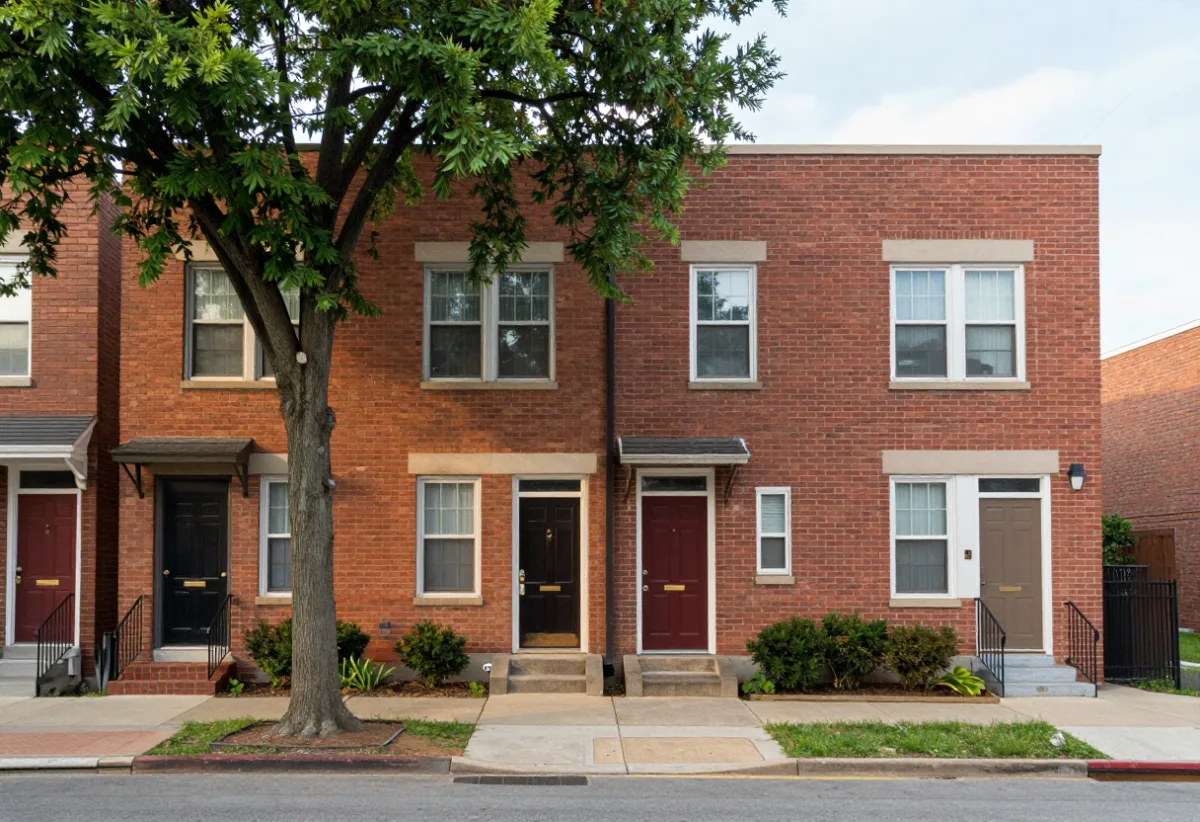
An FHA loan can help you buy a duplex, triplex or fourplex and live in one unit. This guide gives you the federal down-payment and occupancy rules, then shows the rental-income property test that applies to three- and four-unit purchases.
FHA insures mortgages that approved lenders make for eligible one- to four-unit homes in the United States. House hacking here means living in one unit and renting the others. It is not an FHA route for buying a fully rented investment property.
This is general information, not legal, tax, or financing advice. FHA rules are federal, but lender terms and state and local rental rules vary. Check your location and speak with an FHA-approved lender and qualified local professionals before you commit.
The down payment: 3.5% or 10%
For a standard FHA purchase in the United States, HUD's Handbook 4000.1, Update 18 (August 12, 2026) sets maximum financing at 96.5% loan-to-value when the Minimum Decision Credit Score is 580 or higher. That means a 3.5% minimum required investment. With a score from 500 through 579, maximum financing is 90%, which means a 10% minimum required investment. The handbook's score table starts at 500.
Minimum required investment is not the same as total cash to close. Closing costs, prepaids, reserves and a lender's own standards can change the cash you need. Ask an FHA-approved lender whether it offers two- to four-unit loans and what overlays it applies.
You must occupy one unit
For the United States, at least one borrower must move into the property within 60 days after signing the security instrument and intend to stay for at least one year under HUD Handbook 4000.1 policy checked September 29, 2026. FHA financing therefore does not turn a four-unit building into a no-occupancy investor loan.
A duplex is different from a triplex or fourplex
A two-unit purchase is not in the handbook's three- to four-unit Self-Sufficiency Rental Income Eligibility section. It still goes through the lender's applicable FHA income, debt, credit, appraisal and property underwriting.
For a three- or four-unit property, HUD's Handbook 4000.1, Update 18, page 171 (United States, August 12, 2026) requires the mortgagee to complete the self-sufficiency calculation. This is an added property test, not a substitute for the rest of the lender's underwriting.
How FHA's rental-income property test works
For a three- or four-unit property, HUD starts with the appraiser's fair-market-rent estimate for every unit, including the unit the borrower will occupy. It then subtracts the larger of 25% of fair-market rent or the appraiser's vacancy-and-maintenance estimate. HUD calls the result Net Self-Sufficiency Rental Income. The source is the Handbook 4000.1, Update 18, page 171 (United States, August 12, 2026).
Net Self-Sufficiency Rental Income = all-units appraiser FMR - greater of (25% of all-units FMR, appraiser vacancy-and-maintenance estimate)
Next, divide monthly principal, interest, taxes and insurance (PITI) by that net rental income:
Self-sufficiency ratio = monthly PITI / monthly Net Self-Sufficiency Rental Income; must be 100% or less
Under the same HUD handbook rule, the ratio cannot exceed 100%. Said another way, the calculated net rental income must equal or exceed monthly PITI.
Worked fourplex example: does it pass?
Example only; not a real property, lender quote, or guarantee of approval. The calculation below applies HUD's three- to four-unit method to illustrative inputs.
| Step | Calculation | Result |
|---|---|---|
| Appraiser's fair-market rent, all four units | $2,000 x 4 | $8,000/month |
| 25% required comparison amount | $8,000 x 25% | $2,000/month |
| Appraiser's vacancy and maintenance estimate | Given example | $1,600/month |
| Deduction required by HUD | Greater of $2,000 and $1,600 | $2,000/month |
| Net Self-Sufficiency Rental Income | $8,000 - $2,000 | $6,000/month |
| Monthly PITI | Given example | $5,700/month |
| Self-sufficiency ratio | $5,700 / $6,000 | 95% |
| Result | 95% is not more than 100% | Passes this FHA property test |
The example passes the self-sufficiency property test because 95% is not more than HUD's 100% limit. If monthly PITI were $6,100, the ratio would be 101.7% ($6,100 / $6,000), so it would fail this particular test. Passing this test is not final mortgage approval.
Check these items before you offer
- Loan limit. Check the HUD county or MSA loan-limit lookup for the property address and case-number year. The amount differs by location and unit count.
- Rents. Ask how the appraiser's market-rent conclusion, rather than an optimistic listing estimate, affects the three- or four-unit calculation.
- Lender rules. Confirm the lender's documentation and underwriting requirements, including its overlays. This is especially important for a duplex, which does not use the handbook's three- to four-unit self-sufficiency standard but still must qualify through the lender's FHA process.
- Cash and repairs. Write out closing costs, prepaids, reserves and repairs before setting an offer. This house-flip offer multiplier guide is a useful reminder to put financing and carrying costs in the deal budget.
- Local rules. Verify the state and local landlord, zoning and licensing rules for the address before you commit.
If you are comparing this with a manufactured-home purchase, a site-built small multifamily mortgage is not the same product as chattel financing or a real-property mortgage for a manufactured home.
The practical takeaway
FHA's national baseline lets an owner-occupant seek financing for one to four units, subject to the lender's underwriting. A buyer of a duplex does not use the handbook's three- to four-unit self-sufficiency standard. A buyer of a triplex or fourplex needs the appraiser-based calculation above to produce a ratio of 100% or less, as well as meeting the lender's other FHA requirements. Get the lender's view of the property, rents and cash-to-close before you make the offer.